
Blog
How to Measure Time Saved by an AI Pilot

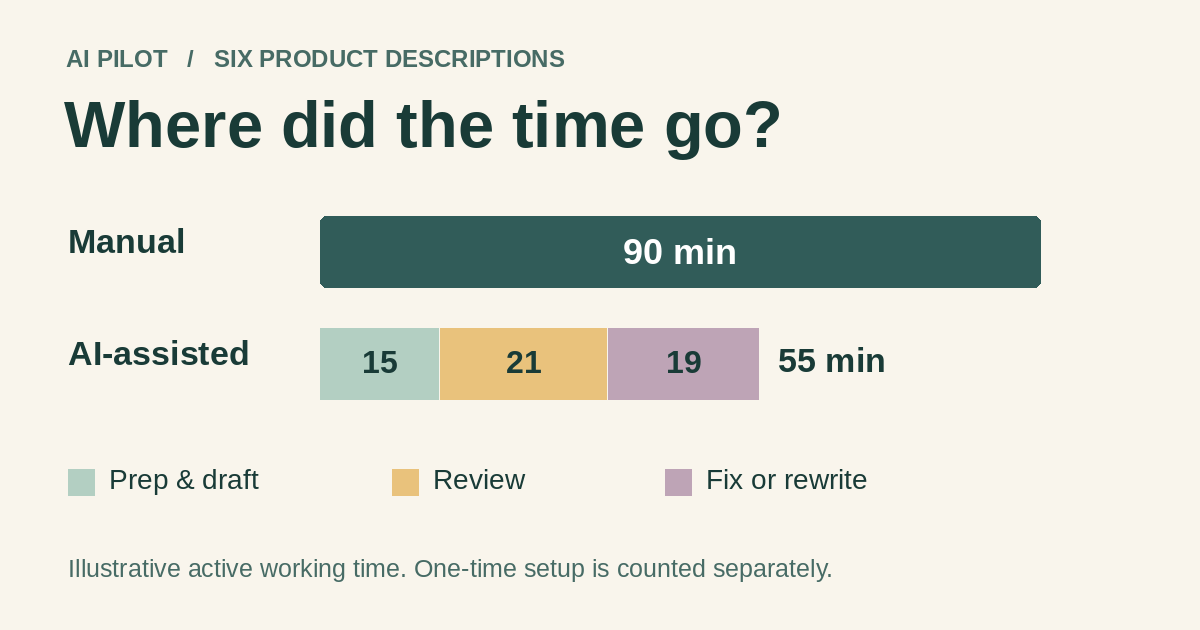
To measure time saved by an AI pilot, compare the time it takes to reach the same usable result with and without the tool. Start the clock when the work begins and stop when a reviewer would release the result. Count the minutes spent finding source material, checking claims and rewriting a failed draft. Record initial setup separately so you can see when it pays back in working time.
Set the finish line before you start
Imagine a homeware shop testing AI for product descriptions. A finished description must give the right material, dimensions and care instructions wherever the supplier provides them. If a fact is missing, the editor leaves it out or asks the supplier. A fluent paragraph with the wrong care instructions still needs work.
For a small comparison, give two editors the same supplier sheets. One prepares a description manually while the other uses AI, and neither sees the other draft. Swap methods on the next item. Use the same release criteria for both. The figures below are fictional active working minutes. If waiting for a tool also delays publication, record that elapsed time separately.
Compare six items, including the failed draft
| Item | Manual | Prep & draft | Review | Fix or rewrite | AI total |
|---|---|---|---|---|---|
| Cotton tea towel | 12 | 2 | 3 | 0 | 5 |
| Stoneware mug | 14 | 2 | 3 | 2 | 7 |
| Oak picture frame | 16 | 3 | 4 | 0 | 7 |
| Glass storage jar | 13 | 2 | 3 | 3 | 8 |
| Brass hook | 18 | 3 | 4 | 2 | 9 |
| Linen apron | 17 | 3 | 4 | 12 | 19 |
| Total | 90 | 15 | 21 | 19 | 55 |
The manual column includes writing and checking. The three AI columns include preparing the source and generating the draft, checking it against the supplier sheet, and fixing or replacing it. A zero in the “Fix or rewrite” column means the reviewer could accept the draft as written.
Look at the linen apron. The draft added a tumble-drying instruction that the supplier sheet never gave. After checking the source, the editor discarded the draft and spent 12 minutes writing an accurate replacement. That brought the item to 19 minutes, two minutes longer than the manual version. Dropping that row would make the pilot look better than it was.
Calculate the saving after review and setup
For these six descriptions: 90 manual minutes − (15 minutes preparing and drafting + 21 reviewing + 19 correcting) = 35 minutes of active time saved. That is about 39% of the manual baseline.
Suppose the team also spent 50 minutes setting up instructions and the review checklist. The first batch then took 105 minutes including setup, 15 more than doing it manually. If a second comparable batch produced the same 35-minute saving, the two batches together would recover setup and leave 20 minutes available for other work. Tool fees and any change in paid hours are separate from this calculation.
What would justify a second trial?
For this shop, an unsupported care instruction is enough to hold an item back. Before the next trial, the team adds a check that every care claim can be traced to the supplier sheet. It repeats the comparison on another batch, keeping the failed cases in the log. If regular checks absorb the time gained, it can keep the manual process for care-sensitive items.
Copy one line for each item: Item or case ID | Manual minutes to approval | AI preparation and drafting minutes | Review minutes | Correction or rewrite minutes | Issue found | Final decision.
Still choosing a task? Start with the first-workflow scorecard and supervised pilot checklist. To plan your own baseline and later review, A Measured Pilot includes the 42-page guide Estimate the Return on an AI Trial and the six-page checklist A Ninety-Day Implementation Review.