
Blog
How to Write a One-Page Case Study for a Sales Conversation

A one-page sales case study should answer the question a prospective customer brought to the conversation. Pick one comparable project. Show the starting problem, the change the client made and a result you can trace to a record. If the reader has to ask what you counted, the page needs another edit.
Start with the buyer’s question
Imagine a print shop owner asking, “How do I keep a job from going to press before the customer approves the artwork?” A story about winning more customers would take the conversation elsewhere. A short account of how another shop handled artwork approvals gives the owner something to examine. Ask yourself which detail they would want to compare with their own shop.
One-page case study example
The print shop and job counts below are fictional. The example shows how much context to keep when you shorten a longer client story.
How a print shop made artwork approval easier to find
The problem. Customers approved artwork by email. At the press, staff sometimes had to search an inbox or call the front desk to establish which version the customer had accepted.
What changed. The production lead added two fields to the job ticket: the approved file name and a link to the customer’s approval. The person preparing the ticket filled them in before handing the job to the press operator.
What the team counted. In the 20 jobs reviewed before the change, six reached the press without an approval record on the ticket. In the next 20 jobs, two did. The production lead checked the tickets at handoff in both batches. These counts describe missing records. The shop did not track misprints or customer complaints.
A question for the buyer. Where does your press operator look for the approved file today? Try tracing one recent job from the customer’s reply to the copy at the press.
Copy this outline for your own project
Buyer’s question — What is the person reading this trying to decide?
Starting point — Who had the problem, and when did it show up?
Change — What did someone actually do differently?
Result and source — What did you count, across how many cases, over what period, and where can you check it?
Next conversation — What could the reader inspect in their own business?
Before sharing a real story, check the numbers against the original record and agree with the client on which names, quotes and figures you can publish. If you only have an observation, describe who saw what. Leave the percentage out until you have a denominator.
What to keep when the story becomes a sales slide
A slide for the same print shop could read: “Jobs reaching the press without recorded approval: 6 of 20 before the ticket change, 2 of 20 after.” Keep the two batch sizes on the slide. Use the speaker notes for the job-ticket detail, and keep the full case study available for a buyer who wants to see exactly how the team counted.
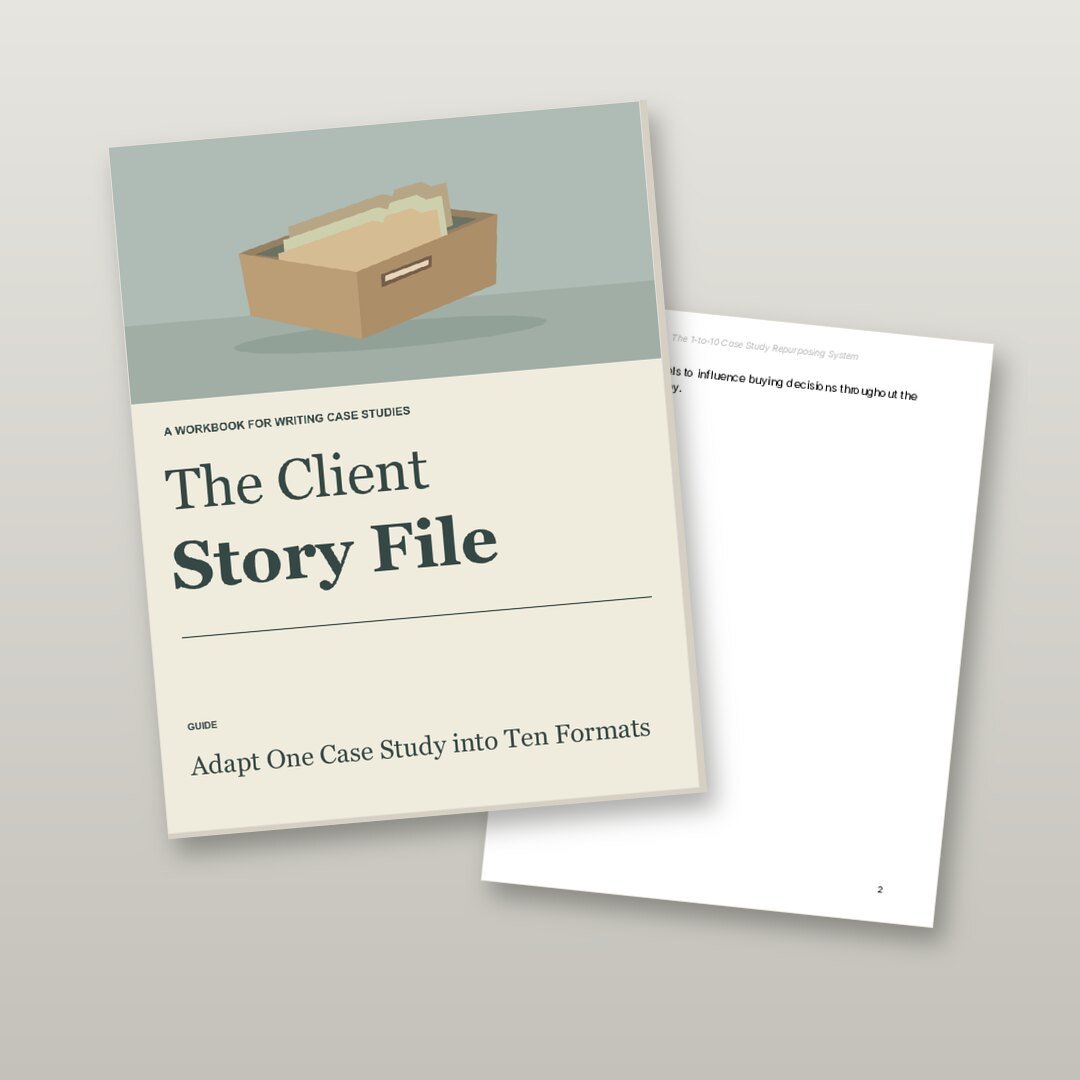
If you have several projects to choose from, The Client Story File includes a project-selection checklist and the 32-page guide Adapt One Case Study into Ten Formats. Start with the checklist if you still need a story. Open the guide once you have a documented result to adapt.