
Blog
Interview Scorecard Example for a Small Team

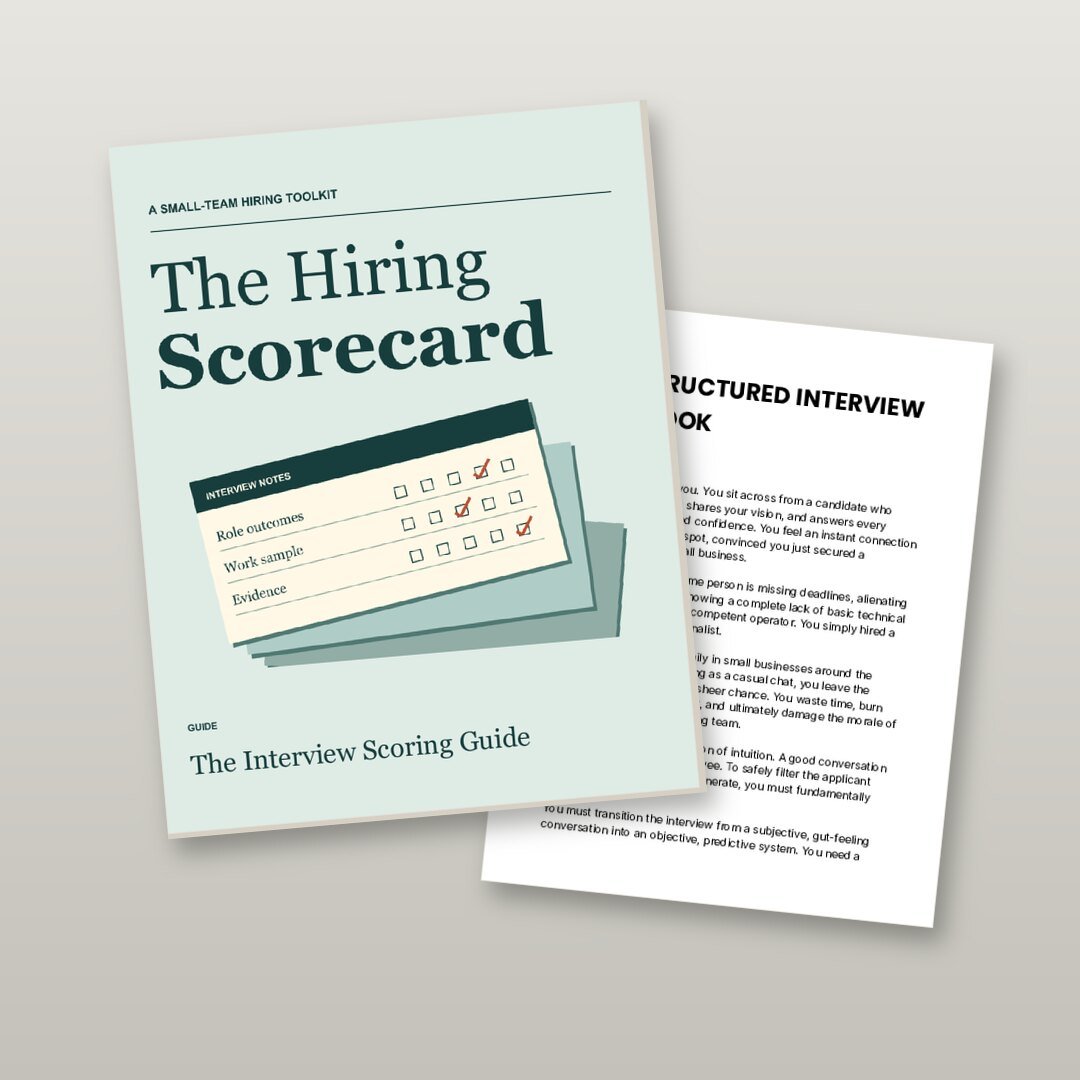
An interview scorecard gives a number a meaning before anyone walks into the room. Pick a task the role actually involves, write one question about it and agree on what a satisfactory answer must show. After the interview, record the words or actions that support the score.
Download the fillable interview scorecard (one-page PDF). Use a separate copy for each candidate and competency. The example below shows how to fill it in for a customer support coordinator.
Choose a question the job can answer
Suppose the coordinator handles urgent delivery changes alongside routine order updates. The skill you want to hear about is prioritising competing requests. Ask each candidate the same question: “Tell me about a time two customer requests needed attention at once. What did you do first, how did you choose, and what happened to the other request?”
Define the scoring anchors before the interviews
An anchor describes the evidence for a score. In this example, 3 is the standard the job requires. Use 2 or 4 when the answer sits between two anchors and write down which part was missing.
| Score | What to listen for |
|---|---|
| 1 · Limited evidence | Describes staying busy or working faster. Gives no example of choosing which request came first. |
| 3 · Meets the standard | Identifies competing requests, explains which one came first and tells the other person what to expect. |
| 5 · Strong evidence | Does everything in the middle row, checks a dependency that could change the order and follows up to see whether the revised plan worked. |
Score two answers to the same question
First answer. “One customer needed a delivery address changed. Another wanted an invoice copy. The delivery had a cutoff that afternoon, so I handled the address first. I told the second customer I would send the invoice by three and sent it at two.”
Example score: 3 of 5. The answer names two requests, explains the order and accounts for the invoice. The interviewer can record “prioritised the delivery cutoff and followed up on the invoice.” It leaves open whether anyone checked that the address change reached dispatch.
Second answer. “I called dispatch to find out when the label would print. They had ten minutes. I changed the address, asked them to read it back and sent the tracking confirmation to the customer. I promised the invoice by three and checked the sent copy before I closed the second request.”
Example score: 5 of 5. Calling dispatch establishes the dependency. Reading back the address and checking the sent invoice show how the candidate verified the outcome. Confidence, accent and answer length play no part in this scoring key.
What to do when the evidence is missing
If the interviewer skipped the question or the call cut out, leave the score blank and note what still needs to be asked. If two interviewers disagree, have each point to the evidence they recorded before discussing a number. A score on one competency is one piece of the hiring decision.
This worksheet uses an original practice scale and fictional answers. For the underlying interview method, the U.S. Office of Personnel Management explains how interviewers use consistent questions and common scoring standards in its structured interview guidance.
If you are also writing the role brief or reviewing the rest of the hiring process, The Hiring Scorecard Bundle includes the 29-page Interview Scoring Guide. Its 1-to-5 rubric begins on page 19.